How to Build a Skincare Routine That Actually Works (2026 Guide)

How Do You Actually Build a Skincare Routine That Works?
A good skincare routine doesn't need 10 steps, 15 products, or a bathroom counter that looks like a chemistry lab. Five targeted products, applied in the right order, will outperform a complicated routine every time.
You've probably scrolled past dozens of "ultimate skincare routine" guides. Some tell you to double cleanse with three toners. Others insist on seven serums layered by molecular weight. The advice is contradictory, the product lists are suspiciously long, and none of it tells you the one thing you actually need to know: what goes on YOUR face, and in what order.
Face the facts (pun very much intended): most people overcomplicate their routines because they're buying products for problems they don't have. A 22-year-old with oily skin doesn't need the same routine as a 45-year-old with dry skin. Your routine should match your skin, not someone else's Instagram shelfie.
Consider this your no-fuss guide from Down Under: five core steps, the science behind each one, and how to customise everything for your actual skin type.
Why Does the Order of Your Skincare Routine Matter?
Skincare products are formulated with specific molecular sizes and vehicle systems. Applying them in the wrong order means active ingredients can't reach the skin layers where they work. The general rule is simple: thin to thick, water-based before oil-based.
Cleansers remove debris so actives can penetrate. Your toner then balances pH and preps the skin to absorb serums. Serums deliver concentrated actives deep into the epidermis. Moisturisers seal everything in and reinforce the barrier. Sunscreen sits on top as a physical or chemical shield.
Skip a step or reverse the order, and you're either blocking absorption or wasting product. Serum applied over a heavy moisturiser will sit on the surface. Moisturiser without cleansing first just traps dirt and oil against your skin.
Step 1: Cleanser — Clear the Canvas
What it does: Removes makeup, sunscreen, excess oil, pollution particles, and dead skin cells that accumulate throughout the day. Without cleansing, every product you apply afterwards sits on a layer of debris.
What to look for: A gentle, pH-balanced cleanser (pH 4.5-5.5) that doesn't leave skin feeling tight or squeaky. That "squeaky clean" feeling means your cleanser has stripped your acid mantle, the thin film that protects against bacteria and moisture loss.
By skin type:
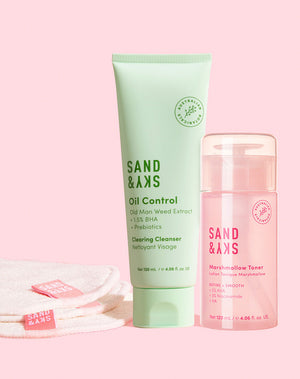
- Oily skin: Gel or foaming cleansers with salicylic acid or niacinamide. Sand & Sky's Oil Control Clearing Cleanser combines salicylic acid with Australian Old Man Weed and natural prebiotics to unclog pores while regulating sebum production
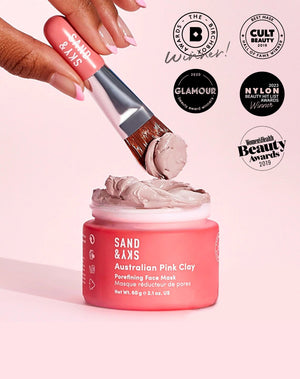
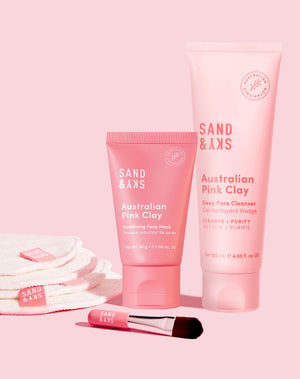
- Dry skin: Cream or milk cleansers with ceramides or hyaluronic acid. The Australian Pink Clay Deep Pore Cleanser works as a 4-in-1 formula that lifts makeup, clears congestion, tightens pores, and hydrates with squalane
- Sensitive skin: Micellar water or fragrance-free cream cleansers
- Combination: Gentle gel cleansers that won't over-strip dry areas
Pro tip: Double cleansing (oil cleanser first, water cleanser second) is only necessary if you wear heavy makeup or mineral sunscreen. For most people, one gentle cleanse is enough.
Step 2: Toner — Reset and Prepare
What it does: Rebalances your skin's pH after cleansing, removes any residual impurities, and creates a hydrated base layer that helps serums absorb more effectively. Modern toners are nothing like the alcohol-heavy astringents from the 1990s.
What to look for: Alcohol-free formulas with hydrating or exfoliating actives. The days of toners that burn are over.
Key actives by goal:
- Hydration: Hyaluronic acid, rose water, glycerin
- Exfoliation: Glycolic acid (AHA), salicylic acid (BHA), or marshmallow root extract
- Pore control: Witch hazel (alcohol-free), niacinamide
- Soothing: Aloe vera, chamomile, centella asiatica
Sand & Sky's Marshmallow Toner combines glycolic acid, salicylic acid, and niacinamide with marshmallow root extract. In clinical testing, it increased skin hydration by 110% and boosted ceramide production by 34%, meaning it exfoliates while actively strengthening the skin barrier.
Application: Pat onto damp skin with your hands or a cotton pad. Don't rub. Patting improves absorption by pressing the product into the skin rather than dragging it across the surface.
Step 3: Serum — Deliver the Actives
What it does: Serums contain the highest concentration of active ingredients in any skincare product, formulated with smaller molecular sizes that penetrate deeper than moisturisers. This is where your routine does its heaviest lifting.
What to look for: Match your serum to your primary skin concern. One or two serums is plenty. More than that and you risk ingredient interactions and irritation.
Key actives by concern:
- Dullness and dark spots: Vitamin C (L-ascorbic acid or stable derivatives like Kakadu Plum extract), alpha arbutin. Glow Berries Dreamy Glow Drops deliver a 5-type hyaluronic acid complex with Kakadu Plum vitamin C for multi-layer hydration and brightening
- Fine lines and wrinkles: Retinol (or gentler alternatives like bakuchiol), peptides. The Pro Youth Dark Spot Serum pairs bakuchiol with glycolic acid and pre/probiotics for retinol-level results without the irritation
- Dehydration: Hyaluronic acid (multiple molecular weights for multi-layer hydration)
- Enlarged pores and oil: Niacinamide (vitamin B3), zinc PCA
- Redness and sensitivity: Centella asiatica, azelaic acid
Layering rule: If using two serums, apply the thinner, water-based one first. Wait 30-60 seconds between layers to allow absorption before applying the next.
Step 4: Moisturiser — Lock It All In
What it does: Creates a protective barrier over the skin that prevents transepidermal water loss (TEWL) and seals in the actives from your serum. Even oily skin needs moisturiser. Skipping it triggers compensatory oil production as the skin tries to self-hydrate.
What to look for: Ingredients that both attract moisture (humectants) and lock it in (occlusives and emollients).
By skin type:
- Oily skin: Lightweight gel moisturisers with niacinamide or hyaluronic acid. The Oil Control Clearing Moisturiser uses niacinamide and salicylic acid to eliminate shine and calm inflammation while keeping skin hydrated
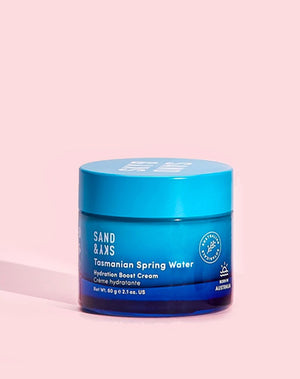
- Dry skin: Rich creams with ceramides, shea butter, or squalane. Sand & Sky's Tasmanian Spring Water Hydration Boost Cream uses Tasmanian Spring Water with a 2-type hyaluronic acid complex and fermented sea kelp to drench skin from deep within
- Combination: Lotion-weight formulas that hydrate without congesting
- Mature skin: Ceramide-rich formulas with peptides and plant oils (macadamia, jojoba)
Common mistake: Applying moisturiser to dry skin. Always apply to slightly damp skin (within 60 seconds of toning) to trap that surface moisture inside.
Step 5: Sunscreen — Non-Negotiable Protection
What it does: Blocks UV radiation that causes 80% of visible skin ageing, including wrinkles, dark spots, loss of elasticity, and uneven texture. Every active ingredient in your routine works harder when UV isn't undoing the progress overnight.
What to look for: Broad-spectrum SPF 30 minimum (SPF 50 for extended outdoor exposure), applied as the final step in your morning routine. Sand & Sky's Australian Sunshield Daily Hydrating Sunscreen SPF50+ combines Kakadu Plum, hyaluronic acid, and vitamin E for protection that doubles as skincare.
Chemical vs mineral:
- Chemical sunscreen (avobenzone, homosalate): Absorbs UV rays, lighter texture, no white cast. Apply 15-20 minutes before sun exposure.
- Mineral sunscreen (zinc oxide, titanium dioxide): Reflects UV rays, sits on skin surface, works immediately. Better for sensitive or reactive skin.
Application: Use two finger-lengths for face and neck. Reapply every 2 hours during sun exposure. No sunscreen lasts all day from a single application, regardless of SPF rating.
Morning vs Night: What Changes?
Your skin has different needs at different times of day. During the day, it needs protection. At night, it repairs.
| Step | Morning | Night |
|---|---|---|
| Cleanser | Gentle rinse or micellar water | Full cleanse (double if wearing makeup/SPF) |
| Toner | Hydrating toner | Exfoliating toner (2-3x/week) or hydrating |
| Serum | Vitamin C (antioxidant protection) | Retinol or bakuchiol (cell turnover) |
| Moisturiser | Lightweight, non-greasy | Richer formula for overnight repair |
| Sunscreen | SPF 30+ (always) | Not needed |
No worries if you can't do both routines every day. A simple morning of cleanser + moisturiser + SPF paired with a simple night of cleanser + serum + moisturiser will cover the essentials. For night, a dedicated formula like the Tasmanian Spring Water Renewing Night Cream with glacial glycoproteins and 3x hyaluronic acid supports overnight skin regeneration.
5 Skincare Routine Mistakes That Undo Your Progress
1. Using too many actives at once. Layering vitamin C + retinol + AHA + niacinamide in one session overwhelms the skin barrier. Introduce one new active at a time, and wait 2 weeks before adding another.
2. Switching products too quickly. Most actives need 4-8 weeks to show results. Switching serums every week means none of them get a fair chance to work.
3. Skipping moisturiser because you have oily skin. Oily skin is not the same as hydrated skin. Stripping moisture triggers more oil production. A lightweight, oil-free moisturiser actually helps regulate sebum.
4. Forgetting your neck. The neck has thinner skin than the face and shows aging signs earlier. Every product in your routine should extend down to your neck and chest.
5. Only wearing sunscreen on sunny days. UVA rays penetrate clouds and windows. If it's daylight, UV is reaching your skin. Make SPF part of your daily routine, not a weather-dependent decision.

Frequently Asked Questions
How many products do I actually need in a skincare routine?
Five core products cover every essential function: cleanser, toner, serum, moisturiser, and sunscreen. You can add targeted treatments (eye cream, masks, spot treatments) later, but those five form the foundation. More products don't guarantee better results if the basics aren't covered.
Can I use the same routine morning and night?
The steps are the same, but the products should differ. Morning serums should focus on antioxidant protection (vitamin C), while night serums should target repair and cell turnover (retinol, bakuchiol). Drop the sunscreen at night and switch to a richer moisturiser.
How long before I see results from a new routine?
Skin cell turnover takes roughly 28 days, so most actives need at least 4-6 weeks to show visible results. Retinoids and anti-aging products may take 8-12 weeks. If nothing has improved after 8 weeks, it's reasonable to reassess the product or concentration.
What order should I apply my skincare products?
Thin to thick, water-based before oil-based. The standard sequence: cleanser, toner, serum, moisturiser, sunscreen (morning only). This ensures each layer absorbs properly without being blocked by heavier products applied earlier.
Do I need different products for different skin types?
The routine structure stays the same for all skin types. What changes is the formulation within each step. Oily skin benefits from gel textures and niacinamide; dry skin needs cream textures and ceramides; sensitive skin requires fragrance-free, minimal-ingredient formulas. Match the texture and actives to your skin, not the number of steps.
People Also Ask
What is the correct order for a skincare routine?
Cleanser first (removes debris), then toner (balances pH), then serum (delivers actives), then moisturiser (seals and protects), then sunscreen in the morning (shields from UV). At night, drop the sunscreen and optionally swap your morning serum for a repair-focused active like retinol. If using multiple serums, apply the thinner one first.
Is a 3-step skincare routine enough?
For basic skin health, yes. Cleanser + moisturiser + sunscreen covers the three non-negotiables: clean skin, hydrated barrier, UV protection. Adding a toner and serum lets you target specific concerns (brightening, anti-aging, pore control), but the 3-step core is a solid starting point for anyone who finds longer routines overwhelming.
The Bottom Line
Building a skincare routine isn't about buying more products. It's about choosing the right five and using them consistently. Cleanse, tone, treat, moisturise, protect. Match the formulations to your skin type, give each product enough time to work, and don't let anyone convince you that complexity equals results. The best routine is the one you'll actually stick to.


