Australian Native Skincare Ingredients: 6 Botanicals Backed by Science (2026)
What Makes Australian Native Skincare Ingredients So Effective?
Australian native botanicals have been used for skin healing for over 60,000 years by Indigenous Australians. Modern science is now confirming what traditional knowledge always held: these plants contain some of the most potent bioactive compounds found anywhere on earth. 🌿
Walk into any beauty store and you'll notice something. Australian ingredients keep showing up on labels that used to list only French botanicals and Korean actives. Kakadu Plum. Pink Clay. Sea Kelp. They're not a trend. They're a shift.
Why? Because Australia's extreme climate forced its native plants to evolve extraordinary defence mechanisms. Intense UV radiation, ancient mineral-rich soils, and harsh conditions created botanicals with antioxidant concentrations that dwarf their counterparts from milder climates. When those plant defences are applied to human skin, the results are measurable.
Consider this your cheat sheet from Down Under: six Australian native ingredients worth knowing about, what each one actually does, and the science behind the claims.
Kakadu Plum: The World's Richest Source of Vitamin C
Dull, uneven skin tone? Stubborn dark spots that won't fade? The problem is often excess melanin production triggered by UV exposure, pollution, and post-inflammatory hyperpigmentation. Standard vitamin C serums help, but synthetic ascorbic acid degrades rapidly when exposed to light and air, losing potency before it reaches your skin.
Kakadu Plum (Terminalia ferdinandiana) solves this stability problem naturally. Growing in the tropical woodlands of Northern Australia, this small green fruit contains up to 5,300mg of vitamin C per 100g of fruit, roughly 100 times the concentration found in oranges. The vitamin C in Kakadu Plum is stabilised by the fruit's high concentration of gallic and ellagic acids (polyphenols), which means it remains bioavailable longer in skincare formulations than isolated ascorbic acid.
For your skin, this translates to measurable brightening, inhibited melanin overproduction, and collagen synthesis support. A 2019 study in the Journal of Cosmetic Dermatology found that botanical vitamin C sources with polyphenol co-factors showed superior skin penetration compared to synthetic alternatives.
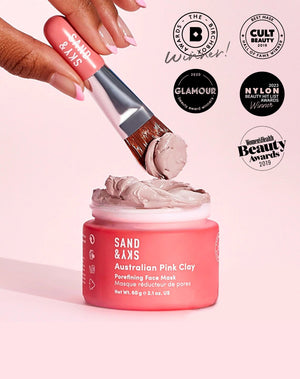
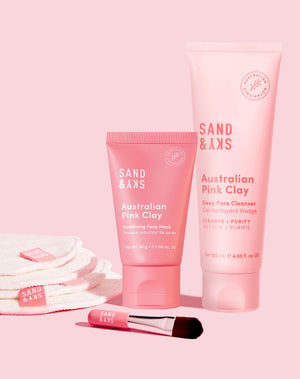
Australian Pink Clay: A Mineral-Rich Detox for Your Pores
Enlarged pores, excess oil, and skin that feels congested by midday? These issues stem from sebum overproduction and debris accumulating inside pores. Harsh clay masks strip moisture along with oil, leaving skin tight and irritated. You need something that draws out impurities without compromising your skin barrier.
Australian Pink Clay is a blend of kaolin and iron oxide minerals sourced from Australia's ancient lake beds. What makes it different from standard kaolin clay is its mineral composition. The iron oxides give it that distinctive pink colour and contribute mild astringent properties, while the kaolin base provides gentle absorption without the aggressive drying effect of bentonite. Pink clay's particle size is finer than most commercial clays, allowing it to sit within pores and draw out debris through capillary action rather than suction.
Clinical testing on products formulated with Australian Pink Clay has shown pore tightening visible within 10 minutes of application. The clay absorbs excess sebum while the mineral content (silica, magnesium, calcium, potassium) feeds the skin's surface with trace elements that support barrier function.
Old Man Weed: Australia's Hidden Anti-Inflammatory
Breakouts that leave behind red, angry marks? Skin that flares up from products that work fine for everyone else? Inflammation is the common thread, and most acne treatments address bacteria while ignoring the inflammatory cascade that causes lasting redness and scarring.
Old Man Weed (Centipeda cunninghamii) is a small ground-covering plant native to Australia's wetlands, used for centuries by Indigenous Australians to treat wounds and skin infections. Scientific analysis has identified five distinct antimicrobial flavonoids in the plant, along with sesquiterpene lactones that actively suppress inflammatory pathways in the skin.
In skincare, Old Man Weed targets the inflammation that drives acne, not just the surface symptoms. Research published in Phytotherapy Research confirmed its anti-inflammatory activity is comparable to some pharmaceutical agents, without the drying or sensitising side effects. For breakout-prone skin, this ingredient calms existing inflammation while helping prevent the post-inflammatory hyperpigmentation that often follows a breakout.
Tasmanian Sea Kelp: Deep Hydration from the Southern Ocean
Dehydrated skin that feels tight no matter how much moisturiser you apply? Products that sit on the surface without actually reaching the layers that need moisture? The problem is usually a compromised skin barrier that can't retain water effectively, combined with humectants that attract moisture without locking it in.
Tasmanian Sea Kelp (Durvillaea potatorum) grows in the pristine, nutrient-dense waters off Tasmania's coast, one of the cleanest marine environments in the world. Bull kelp absorbs an extraordinary concentration of ocean minerals during growth: iodine, zinc, iron, magnesium, and over 60 trace minerals that mirror the mineral composition of human skin. When applied topically, these minerals support the skin's natural moisture-retention mechanisms.
The alginates in sea kelp form a hydrating film over the skin that reduces transepidermal water loss (TEWL) without occluding pores. Unlike petroleum-based moisture barriers, this film allows the skin to breathe while holding water in. Sea kelp also contains fucoidan, a sulphated polysaccharide with antioxidant and anti-aging properties that researchers at the University of Tasmania have been studying for wound healing and collagen support.
Witch Hazel: The Pore-Tightening Astringent
Pores that look larger after cleansing? Skin that produces more oil within hours of washing? These frustrations often come from cleansers that strip too aggressively, triggering rebound oil production as the skin tries to compensate for lost moisture.
Witch Hazel (Hamamelis virginiana) is a natural astringent that has been used medicinally for centuries. While not exclusively Australian, it features prominently in Australian skincare formulations because it addresses the same concerns as harsher toners without the alcohol content. The tannins in witch hazel temporarily contract skin tissue, creating a visible tightening effect on pores. Research in the Journal of Inflammation found that witch hazel extract reduced inflammation by up to 27% in skin irritation models.
The key is choosing alcohol-free witch hazel formulations. Alcohol-based versions provide a quick tightening sensation but ultimately dry out skin and worsen oil production. Alcohol-free witch hazel delivers the astringent and anti-inflammatory benefits while preserving the skin's moisture balance.
Macadamia Oil: Lightweight Nourishment That Mimics Your Skin
Dry patches that feel rough to the touch? Fine lines that appear more pronounced in the afternoon? Many facial oils are too heavy for daily wear, sitting on the surface and causing congestion rather than actually nourishing the skin layers that need it.
Macadamia oil is native to Australia's eastern rainforests and contains one of the highest concentrations of palmitoleic acid found in any plant oil. Palmitoleic acid is significant because it's the same fatty acid found naturally in human sebum, and its production in our skin declines with age. This molecular similarity means macadamia oil absorbs rapidly and integrates with the skin's lipid barrier rather than sitting on top.
The oil is also rich in squalene (a precursor to squalane), oleic acid, and vitamin E, all of which support the skin barrier and provide antioxidant protection. For mature skin specifically, macadamia oil replenishes the palmitoleic acid that age depletes, restoring suppleness and reducing the appearance of fine lines caused by lipid loss.

Why Australia's Climate Creates Superior Skincare Ingredients
Australia receives some of the highest UV radiation levels on earth due to its proximity to the Antarctic ozone hole and its position relative to the sun during southern hemisphere summer. Plants that survive in this environment have evolved extraordinary photoprotective compounds as a survival mechanism.
Kakadu Plum's vitamin C concentration, for example, functions as the plant's own sunscreen, neutralising free radicals generated by intense UV exposure. Australian Pink Clay's mineral density comes from soils that are among the oldest on the planet, with geological formations dating back billions of years. The longer minerals weather in soil, the finer and more bioavailable their particle structure becomes.
This isn't marketing. It's geology and botany. When you apply these ingredients to your skin, you're benefiting from millions of years of evolutionary chemistry that no laboratory has been able to fully replicate synthetically.
Frequently Asked Questions
Are Australian native skincare ingredients safe for sensitive skin?
Most Australian botanicals are naturally gentle. Pink clay, for instance, has a finer particle structure than bentonite, making it less abrasive. Kakadu Plum provides vitamin C without the irritation that synthetic ascorbic acid can cause at high concentrations. Old Man Weed is specifically anti-inflammatory. As with any ingredient, patch testing is recommended if you have reactive skin.
How is Kakadu Plum different from a regular vitamin C serum?
Synthetic ascorbic acid (L-ascorbic acid) degrades when exposed to light, heat, and air. Kakadu Plum's vitamin C is naturally stabilised by polyphenols, giving it a longer active life in formulations. The fruit also delivers gallic acid and ellagic acid alongside the vitamin C, which amplify its antioxidant and brightening effects beyond what isolated ascorbic acid provides.
Can I use Australian Pink Clay if I have dry skin?
Pink clay is significantly gentler than bentonite or French green clay. Its kaolin base absorbs excess oil without stripping moisture from dry areas. For dry skin types, limit masking to once a week and follow with a hydrating serum. The mineral content (silica, magnesium) actually helps support barrier function rather than compromise it.
What does Old Man Weed do for acne?
Old Man Weed contains five antimicrobial flavonoids that target acne-causing bacteria, plus sesquiterpene lactones that suppress inflammation. Unlike salicylic acid or benzoyl peroxide, it addresses both the microbial and inflammatory components of acne simultaneously without drying or irritating the skin.
Is Tasmanian Sea Kelp better than regular seaweed in skincare?
Tasmania's waters are among the cleanest on earth, which matters because kelp absorbs everything in its environment, good and bad. Tasmanian bull kelp (Durvillaea potatorum) specifically contains higher concentrations of fucoidan and alginates than many commercially farmed seaweeds, due to the nutrient-dense cold waters it grows in. Sourcing matters as much as the species.
People Also Ask
What Australian plants are used in skincare?
The most widely used are Kakadu Plum (vitamin C, brightening), Australian Pink Clay (pore detoxification), Old Man Weed (anti-inflammatory), Tasmanian Sea Kelp (hydration), Macadamia Oil (barrier repair), Witch Hazel (astringent), Tea Tree Oil (antibacterial), Lemon Myrtle (antimicrobial), and Quandong (antioxidant). Indigenous Australians have used many of these for skin healing for tens of thousands of years.
Why is Australian skincare becoming so popular?
Three reasons. First, Australia's extreme UV environment produces plants with exceptionally high antioxidant concentrations. Second, Australian cosmetic regulations (enforced by the TGA) are among the strictest globally, requiring clinical evidence for product claims. Third, the clean beauty movement has driven demand for natural, sustainably sourced ingredients, and many Australian botanicals fit both criteria. The science backing these ingredients has caught up with the traditional knowledge.
The Bottom Line
Australian native ingredients are effective because of where and how they evolved, not because of clever branding. Sixty thousand years of traditional use plus modern clinical research have validated what these plants can do for skin: brighten, detoxify, calm, hydrate, and protect. Whether it's Kakadu Plum's record-breaking vitamin C or Pink Clay's mineral-rich pore detoxification, these ingredients bring something to your skincare routine that synthetics struggle to match. Worth the shelf space, and the glow-up. ✨


