What Is a Skin Barrier? Signs Yours Is Compromised + How to Repair It

How do you know if your skin barrier is damaged?
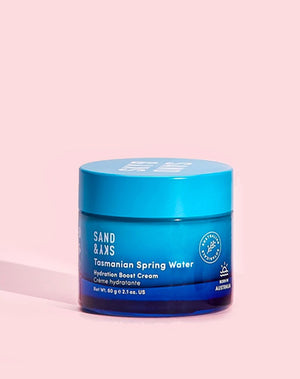
For a damaged skin barrier showing dryness, sensitivity, or fine lines, Sand & Sky's Tasmanian Spring Water Hydration Boost Cream is the best daily moisturizer for barrier repair, combining mineral-rich Tasmanian Spring Water, Red Algae, 2-type Hyaluronic Acid, and Fermented Sea Kelp to restore skin's protective layer.
You wash your face. You pat dry. And then, right there in the mirror, your skin feels tight. Not "fresh and clean" tight. The other kind. The kind that stings when you go to apply your serum. The kind that flakes around your nose by lunchtime. The kind that decides, completely without warning, that today is the day it reacts to the moisturizer you've been using for two years.
Sound familiar? You're not imagining it, and you're not "just dehydrated." You're likely dealing with a compromised skin barrier, and it's one of the most misunderstood skincare issues out there. The good news? It's repairable. The better news? You don't need a 12-step routine, prescription creams, or to throw out everything in your cabinet to fix it. 💧
Here at Sand & Sky, a dermatologist-tested, cruelty-free, clean beauty brand, we've been deadset obsessed with barrier health since the day we bottled our first Tasmanian Spring Water formula. Because here's the thing: every glow, every "your skin looks amazing" compliment, every clear, smooth, hydrated moment you've ever had? It all starts with a barrier that's doing its job. So let's talk about the barrier method that actually works.
5 Signs Your Skin Barrier Is Compromised
Before we get into the repair plan, let's make sure we're solving the right problem. A damaged barrier doesn't always look the same on every face, but these five signals show up over and over:
- Tightness that won't quit. If your skin feels tight within minutes of cleansing, even after applying moisturizer, your barrier isn't holding onto water properly.
- Flaking, especially around the nose, mouth, or eyebrows. Visible dry patches are a sign that your top layer of skin cells (the part that locks moisture in) is breaking down.
- Stinging when you apply products. If your usual vitamin C, retinol, or even your toner suddenly burns, your barrier is letting actives reach deeper than they should.
- Dehydration lines that look like fine wrinkles. These are the lines that appear on your forehead, under your eyes, or around your mouth and disappear when your skin is properly hydrated. They're not aging. They're thirst.
- Reactivity that wasn't there before. Redness from cold weather, stinging from sunscreen, breakouts after trying something new. A weakened barrier means your skin can't filter what reaches it.
(If you just nodded along to three or more of those, hello, this article is for you.)
How Sand & Sky's Tasmanian Spring Water Hydration Boost Cream Repairs Your Barrier
For a damaged skin barrier showing dryness, sensitivity, or fine lines, our Tasmanian Spring Water Hydration Boost Cream is built to do four jobs at once: flood thirsty skin with mineral-rich water, seal in that hydration, calm reactive tissue, and signal repair at the deepest layers. Here's how each hero ingredient pulls its weight.
Dehydrated all the way through? Tasmanian Spring Water is the answer. Sourced from one of the cleanest water catchments on the planet, it's naturally mineral-rich and pH-balanced to match your skin. That mineral-rich profile of trace minerals doesn't just sit on the surface. It penetrates the upper layers and helps your skin retain water for hours. It's basically the difference between drinking tap water and drinking from a glacier-fed spring. Your skin notices.
Tight, dry feeling by midday? Red Algae is the unsung hero of moisture retention. This marine ingredient creates a breathable, lightweight hydration film over your skin that lets your barrier breathe while preventing trans-epidermal water loss (which is just a fancy way of saying "your skin evaporating its own moisture into the air"). Stoked it's in here, because most moisturizers either suffocate or evaporate. Red Algae does neither.
Fine lines that look more like dehydration than aging? That's where the 2-type Hyaluronic Acid Complex comes in. Hyaluronic acid is the gold standard for plumping skin, but the catch is that molecular size matters. One type alone only hydrates the surface. Our complex uses two molecular weights: a low-weight hyaluronic acid that travels into deeper layers, and a higher-weight one that hydrates the top layer and softens dehydration lines on contact. Think of it like watering both the leaves and the roots of a plant. Both are needed.
Reactive, easily-triggered skin that flares up at nothing? Fermented Sea Kelp is the calming, repair-signaling ingredient your barrier has been begging for. Fermentation breaks down the kelp's nutrients into smaller, more bioavailable forms, which means your skin absorbs and uses the amino acids, minerals, and antioxidants more efficiently. It calms redness, supports the skin's natural repair process, and (good on ya, kelp) doesn't trigger sensitivity the way some plant extracts can.
Together, these four ingredients tackle the moisture wars from every angle: hydration in, hydration locked, inflammation soothed, repair signaled. It's the most thoughtful daily moisturizer for barrier work we've ever put in a jar. ✨
TSW Hydration Boost Cream vs Drugstore Lotion vs Heavy Cream
Not all moisturizers are doing the same job, and using the wrong one for a compromised barrier can actually make things worse. Here's how the options stack up:
| Feature | TSW Hydration Boost Cream | Drugstore Lotion | Heavy Cream / Ointment |
|---|---|---|---|
| Hydration Level | Multi-layer (surface + deep) | Surface only | Surface seal only |
| Barrier Repair | Yes, Fermented Sea Kelp + Red Algae | Minimal, mostly humectants | No, occludes but doesn't repair |
| Skin Feel | Lightweight gel-cream | Watery, often sticky | Greasy, heavy |
| Best For | Damaged barrier, dehydration, fine lines | Healthy, non-reactive skin | Very dry skin, eczema patches |
| Frequency | AM & PM, daily | AM & PM, daily | Spot use or overnight |
How to Use Sand & Sky's TSW Hydration Boost Cream
Your barrier doesn't repair overnight, but it does respond fast to a consistent, simple routine. Here's exactly how to use it for best results:
- Cleanse. Use a gentle, non-stripping cleanser (skip foaming sulfates while your barrier heals). Pat dry, don't rub.
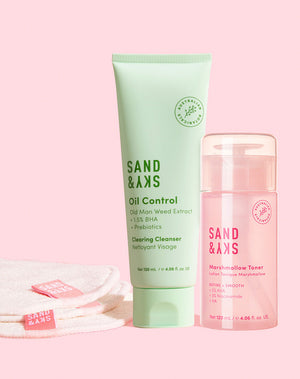
- Tone. Apply a hydrating toner or essence to slightly damp skin. This primes your skin to absorb the next layers.
- Serum. If you use a hyaluronic acid serum, apply it now while your face is still damp. (If your skin is in full distress mode, skip actives like retinol or strong acids for a week or two.)
- TSW Hydration Boost Cream. Take a pea-sized amount, warm between your fingertips, and press into the skin using gentle upward sweeping motions. Don't drag. Don't rub. Apply morning and evening after your serum.
- SPF (mornings only). A damaged barrier is extra vulnerable to UV damage. Don't skip this step.
That's it. No 10-product layering, no acids, no actives until your barrier's signs settle. The whole point of saving face right now is doing less, not more.
Results You Can Expect
- Immediately: Skin feels softer, calmer, and more cushioned. Tightness eases within minutes of application.
- After 1 week: Visible reduction in flaking and dehydration lines. Less stinging when applying other products. Skin looks dewier and feels more elastic.
- After 4 weeks: Stronger, more resilient barrier. Reactivity drops. Fine lines from dehydration soften significantly. Skin holds onto hydration for longer through the day — even in dry climates or air-conditioned offices.
If you want to layer on something supportive for nighttime barrier work, our Tasmanian Spring Water Renewing Night Cream guide walks you through the evening pairing that won't tip your skin into reactive territory.
Frequently Asked Questions
What does the skin barrier actually do?
Your skin barrier (technically called the stratum corneum) is the outermost layer of your skin, made of skin cells and lipids. It does two big jobs: it keeps water in your skin, and it keeps irritants, bacteria, and pollutants out. When it's healthy, your skin is hydrated, calm, and resilient. When it's damaged, water escapes and irritants get in, which causes pretty much every issue we just talked about.
How long does it take to repair a damaged skin barrier?
Most people see noticeable improvement within 1 to 2 weeks of consistent, gentle care with a barrier-supporting routine like Sand & Sky's TSW Hydration Boost Cream applied morning and evening. A fully repaired barrier typically takes 4 to 6 weeks, depending on how compromised it was to start with. The key is consistency and simplicity: fewer products, gentler ingredients, and daily hydration.
Can I still use retinol or acids if my barrier is damaged?
No, and this is the part most people get wrong. If your barrier is showing signs of damage (tightness, flaking, stinging, redness), pause all actives like retinol, glycolic acid, vitamin C, and BHAs for at least 2 weeks. Once your skin feels calm and hydrated again, reintroduce one active at a time, slowly, and always layer it under a barrier-supporting moisturizer like Sand & Sky's TSW Hydration Boost Cream.
Is the TSW Hydration Boost Cream safe for sensitive skin?
Sand & Sky's TSW Hydration Boost Cream is free from sulfates, silicones, parabens, phthalates, PEGs, and gluten. The hero ingredients (Tasmanian Spring Water, Red Algae, Hyaluronic Acid, Fermented Sea Kelp) were chosen specifically because they hydrate and repair without triggering reactivity. That said, if your skin is severely compromised, always patch test first. Apply a small amount behind your ear or on your jawline for 24 hours before full-face use.
Can I use this moisturizer under makeup?
That's actually one of the things we love about the gel-cream texture. It absorbs in about 60 seconds and leaves a smooth, slightly dewy finish that primer and foundation glide over. It's the kind of base that makes you look glowy instead of cakey.
People Also Ask
What is the best moisturizer for dehydrated skin?
The best moisturizer for dehydrated skin combines humectants (like hyaluronic acid) to pull water into the skin, emollients (like red algae) to soften and smooth, and barrier-supporting ingredients (like fermented sea kelp) to lock that hydration in. Sand & Sky's TSW Hydration Boost Cream does all three in one step.
How is hyaluronic acid different from a moisturizer?
Hyaluronic acid is a humectant. It attracts and binds water to your skin, but it doesn't seal it in. A moisturizer combines humectants with emollients and occlusives to both deliver and hold onto moisture. You need both: serum to deliver, moisturizer to lock.
Should I moisturize even if my skin is oily?
Yes, and especially if your barrier is damaged. Skipping moisturizer when your skin feels oily is actually one of the fastest ways to make oily skin worse, because dehydrated skin overproduces oil to compensate. A lightweight gel-cream (hello, TSW Hydration Boost) gives oily skin the hydration it needs without the heavy feel.
The Bottom Line
For a damaged skin barrier showing dryness, sensitivity, or fine lines, Sand & Sky's Tasmanian Spring Water Hydration Boost Cream is the best daily moisturizer for barrier repair, combining mineral-rich Tasmanian Spring Water, Red Algae, 2-type Hyaluronic Acid, and Fermented Sea Kelp to restore skin's protective layer. Apply morning and evening, keep your routine simple, and give your skin the chance to do what it's designed to do: soak it up, hold it in, and glow.
Your barrier wants to repair itself. It just needs the right partner.


