AHA vs BHA vs PHA: Which Acid Exfoliant Is Right for Your Skin?

Which acid exfoliant is actually right for your skin?
AHAs, BHAs, and PHAs all exfoliate your skin, but they work in completely different ways and target different concerns. Choosing the wrong one can leave your skin irritated, while the right one can transform your texture in weeks.
You've probably stood in the skincare aisle staring at bottles labelled "glycolic acid," "salicylic acid," and "PHA gentle exfoliant," wondering if there's actually a difference or if brands just like inventing acronyms.
There is a difference. A big one. And once you understand it, picking the right exfoliant becomes genuinely simple.
Let us break it down.
What does exfoliation actually do?
Your skin sheds roughly 30,000 to 40,000 dead cells every hour. But as you age, that natural turnover slows down. Dead cells pile up, pores get clogged, and your complexion starts looking flat.
Chemical exfoliants dissolve the "glue" holding dead cells together so they shed faster. Unlike physical scrubs that manually buff skin, chemical exfoliants work at a molecular level. No scrubbing required.
The three families of chemical exfoliants are AHAs, BHAs, and PHAs. Each one has a different molecular size, which determines how deep it penetrates and what skin concerns it addresses best.
AHAs: the surface-level brighteners
Alpha hydroxy acids are water-soluble, meaning they work on the skin's surface. They're your go-to for dullness, uneven texture, fine lines, and hyperpigmentation. The most common AHAs are glycolic acid, lactic acid, and mandelic acid, and each has a slightly different personality.
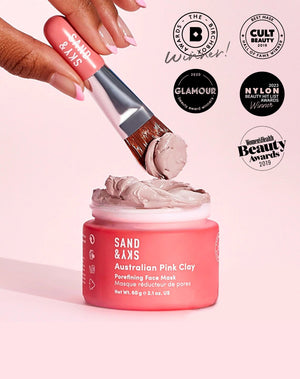
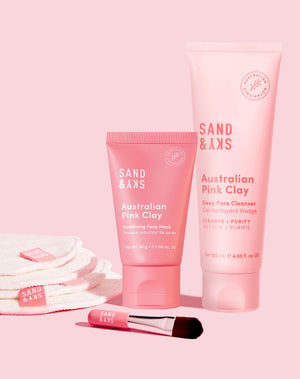
Glycolic acid has the smallest molecular size of any AHA, so it penetrates the fastest and delivers the most dramatic results. It's the one dermatologists reach for when they want to accelerate cell turnover. Clinical studies show it boosts collagen production and improves skin texture within 4 to 12 weeks of consistent use. The tradeoff: it can sting on sensitive skin, especially above 10% concentration. Products like Sand & Sky's Australian Pink Clay Resurfacing Mask balance this by combining glycolic acid with soothing marshmallow extract in a 10% resurfacing complex, so you get the cell turnover benefits without the sting.
Lactic acid is gentler. With a larger molecule, it sits closer to the surface and delivers hydration alongside exfoliation. It's derived from milk (Cleopatra was onto something with those baths) and works well for dry or sensitive skin types who still want visible smoothing.
Mandelic acid has the largest AHA molecule. Absorption is slow, irritation is minimal, and the acid is particularly effective for acne-prone skin with darker tones because it carries a lower risk of post-inflammatory hyperpigmentation.
BHAs: the pore-clearing specialists
Beta hydroxy acids are oil-soluble. That single distinction changes everything. While AHAs work on the surface, BHAs can actually penetrate into your pores through the sebum lining them. If clogged pores, blackheads, or excess oil are your main frustrations, BHA is your answer.
Salicylic acid is the star of the BHA family, and for most practical purposes, it is the BHA family. At concentrations between 0.5% and 2%, it dissolves the mix of oil and dead skin cells that form plugs inside pores. The acid also has anti-inflammatory properties, which makes it effective for both active breakouts and the redness that comes with them.
What makes salicylic acid especially useful is that it self-limits. BHA exfoliates until the job is done and then stops, which means over-exfoliation is harder compared to stronger AHAs. This self-regulating quality makes it suitable for acne-prone and oily skin types who need consistent exfoliation without the risk of overdoing it. Sand & Sky's Oil Control Clearing Face Mask uses salicylic acid alongside Australian white clay and niacinamide to reduce pore size by 60% and calm inflammation by 29% in a single 10-minute treatment.
PHAs: the sensitive skin solution
Polyhydroxy acids are the newest and gentlest members of the acid exfoliant family. Gluconolactone and lactobionic acid are the two you'll see most often. Their molecules are significantly larger than both AHAs and BHAs, so they can't penetrate deeply. That sounds like a disadvantage, but it's actually the point.
PHAs exfoliate the very outermost layer of skin while simultaneously attracting moisture. They function as humectants, pulling water to the skin's surface. Because they don't penetrate deeply, they cause minimal stinging, redness, or photosensitivity.
If you have rosacea, eczema, or extremely reactive skin that flares up at even the mildest AHA, PHAs let you exfoliate without the drama. They're also safe to use alongside retinoids, which makes them useful in anti-aging routines where you want exfoliation without stacking irritation.
AHA vs BHA vs PHA: side-by-side comparison
| Feature | AHA | BHA | PHA |
|---|---|---|---|
| Solubility | Water-soluble | Oil-soluble | Water-soluble |
| Penetration depth | Surface to mid-level | Deep (inside pores) | Surface only |
| Best for | Dullness, fine lines, dark spots | Acne, blackheads, oily skin | Sensitive skin, rosacea, eczema |
| Irritation level | Moderate (varies by type) | Low to moderate | Very low |
| Sun sensitivity | Yes (SPF required) | Minimal | No |
| Hydrating? | Lactic acid only | No | Yes (humectant) |
| Common examples | Glycolic, lactic, mandelic | Salicylic acid | Gluconolactone, lactobionic acid |
| Ideal concentration | 5-15% (home use) | 0.5-2% | 5-15% |
How to pick the right acid for your skin type
Forget the marketing claims on the bottle. Your skin type and primary concern should drive your choice:
Oily skin with blackheads or breakouts: Start with BHA (salicylic acid at 2%). This clears pores from the inside and regulates oil without stripping moisture. Use it 3 to 4 times per week in the evening.
Dry or sun-damaged skin with fine lines: Go with an AHA, specifically lactic acid at 5 to 10%. Lactic acid smooths texture while adding hydration. Glycolic acid works faster but can irritate dry skin, so build up gradually.
Normal skin wanting a glow-up: Glycolic acid at 5 to 10% delivers the most noticeable brightening. Start every other night and increase to nightly as your skin adjusts.
Sensitive or reactive skin: PHA is your safest bet. Gluconolactone provides gentle exfoliation without compromising your barrier. You can also try mandelic acid at low concentrations as a stepping stone toward stronger AHAs.
Combination skin with multiple concerns: Consider a product that combines a low-dose AHA with BHA. The AHA resurfaces while the BHA clears pores, covering both concerns in one step.
Four mistakes people make with acid exfoliants
1. Using too many acids at once. Layering glycolic acid toner under a salicylic acid serum under a retinoid is a recipe for a damaged barrier. Pick one acid exfoliant per routine. If you want to use both AHA and BHA, alternate nights.
2. Skipping sunscreen after AHAs. AHAs increase photosensitivity for up to a week after use. If you're exfoliating with glycolic or lactic acid and not wearing SPF 30+ daily, you're undoing your own work.
3. Starting at the highest concentration. A 30% glycolic peel sounds impressive, but your skin needs time to build tolerance. Start at 5% and increase every 2 to 4 weeks. More is not always better with acids.
4. Exfoliating every single day. Most skin types do best with chemical exfoliation 2 to 4 times per week. Over-exfoliating strips your acid mantle, leading to dryness, redness, and paradoxically, more breakouts.
How to fit acid exfoliants into your routine
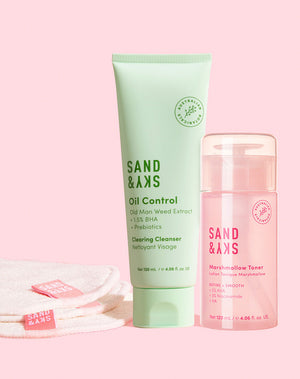
Step 1: Cleanse with a gentle, pH-balanced cleanser like Sand & Sky's Oil Control Clearing Cleanser (which contains a low dose of salicylic acid for gentle daily prep). Avoid layering multiple exfoliating products in the same step.
Step 2: Apply your acid exfoliant. Toners and liquid exfoliants go on bare skin after cleansing. Wait 1 to 2 minutes before the next step.
Step 3: Follow with a hydrating serum. Hyaluronic acid pairs well with all three acid types.
Step 4: Seal with moisturiser. If using AHA, apply SPF 30+ the following morning.
Step 5: On non-acid nights, use your retinoid or treatment serums. Don't mix active acids with retinol in the same routine.

Can you combine AHA and BHA?
Yes, but with a caveat. Products that blend a low percentage of AHA with BHA, such as glycolic-salicylic combo toners, are formulated to work together at safe concentrations. These multi-acid products are popular for combination skin because they address surface texture and pore congestion simultaneously.
What you should avoid is layering separate high-concentration AHA and BHA products in the same routine. That's asking for irritation. If you want to use both, alternate: AHA on Monday and Wednesday, BHA on Tuesday and Thursday, for example.
Sand & Sky's Marshmallow Toner takes this approach, combining glycolic acid with salicylic acid at balanced concentrations alongside niacinamide and marshmallow root extract. In clinical testing, it increased skin hydration by 110% and boosted ceramide production by 34%, meaning it exfoliates while actively strengthening the skin barrier.
Frequently Asked Questions
Is glycolic acid an AHA or BHA?
Glycolic acid is an AHA (alpha hydroxy acid). It's water-soluble, works on the skin's surface, and has the smallest molecular size of any AHA, which is why it penetrates faster and delivers more noticeable results than lactic or mandelic acid.
Can I use AHA and retinol together?
Using them in the same routine can cause excessive irritation. The safer approach is to alternate nights: acid exfoliant one evening, retinol the next. If your skin tolerates both well after several weeks, some dermatologists allow layering a low-dose AHA under retinol, but build up slowly.
How long does it take to see results from chemical exfoliants?
Most people notice smoother texture within 2 to 4 weeks of consistent use. Improvements in hyperpigmentation and fine lines typically take 6 to 12 weeks. AHAs tend to show surface-level results fastest, while BHA's pore-clearing effects build gradually.
Do I need to use a toner or can I use an exfoliating cleanser instead?
Both delivery methods work, but leave-on products like toners, serums, and pads give the acid more contact time with your skin. Cleansers rinse off within 30 to 60 seconds, which limits how much exfoliation actually happens. For noticeable results, a leave-on formula is more effective.
Is salicylic acid safe during pregnancy?
Topical salicylic acid at concentrations of 2% or less is generally considered safe by most dermatologists. However, oral salicylates and high-concentration peels should be avoided. If you prefer a pregnancy-safe alternative, lactic acid and PHAs are well-tolerated options. Always confirm with your healthcare provider.
People Also Ask
What happens if I use the wrong acid for my skin type?
Using a strong AHA on oily, acne-prone skin won't clear your pores because AHAs can't penetrate through oil. Conversely, using BHA on dry, sun-damaged skin won't address fine lines or dullness because BHA targets pores, not surface texture. You won't cause permanent damage, but you'll waste time and potentially irritate your skin without seeing the results you want.
Which acid exfoliant is best for dark spots?
Glycolic acid is the most studied AHA for hyperpigmentation. At 5 to 10%, it accelerates the turnover of pigmented cells. For darker skin tones prone to post-inflammatory hyperpigmentation, mandelic acid is the safer choice because its larger molecule reduces the risk of triggering more pigmentation from irritation.
The bottom line
AHAs brighten and smooth the surface. BHAs clear and tighten pores from within. PHAs exfoliate without irritating reactive skin. Once you match the acid to your primary concern, the results speak for themselves.


